
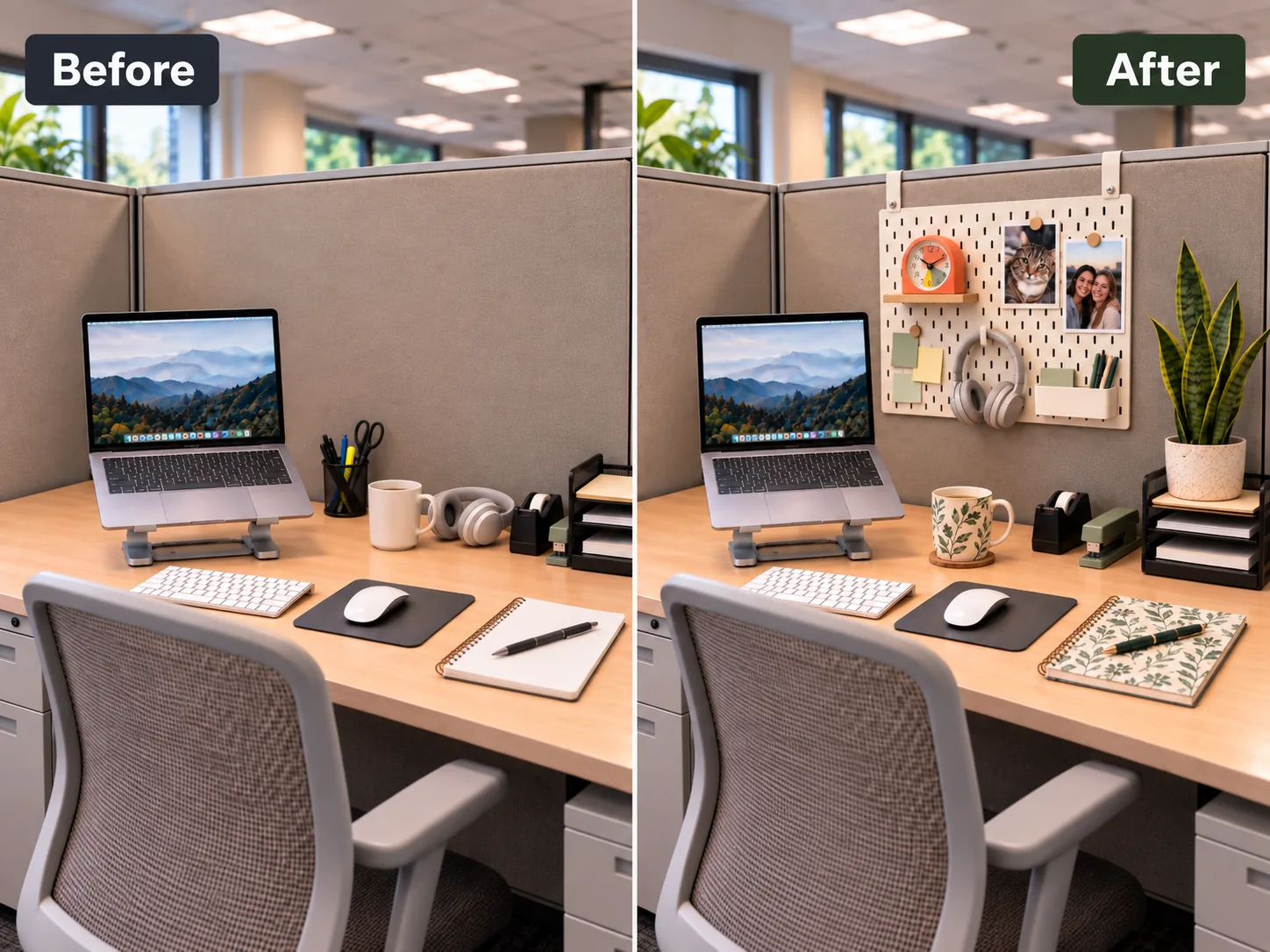
Most cubicles are designed to be practical, not beautiful. You have a desk, a chair, a computer, and all the little things you need to get through the workday.
The problem is that those useful things can quickly make a small workspace feel cluttered and unfinished.
For this cubicle refresh, I wanted to show how much difference a few simple changes could make without replacing everything or filling the desk with decorations.
The goal was pretty straightforward: keep the things that are useful, organize them better, and add just enough color and personality to make the whole space feel more pulled together.
The Before: Functional, but a Little Flat
The starting point was a pretty typical cubicle.
There was a laptop, keyboard, mouse, notebook, headphones, coffee mug, pens, tape, stapler, and paper tray. Everything had a purpose, but most of it was sitting directly on the desk.
Nothing was really wrong with the setup. It just felt a little plain and disconnected.
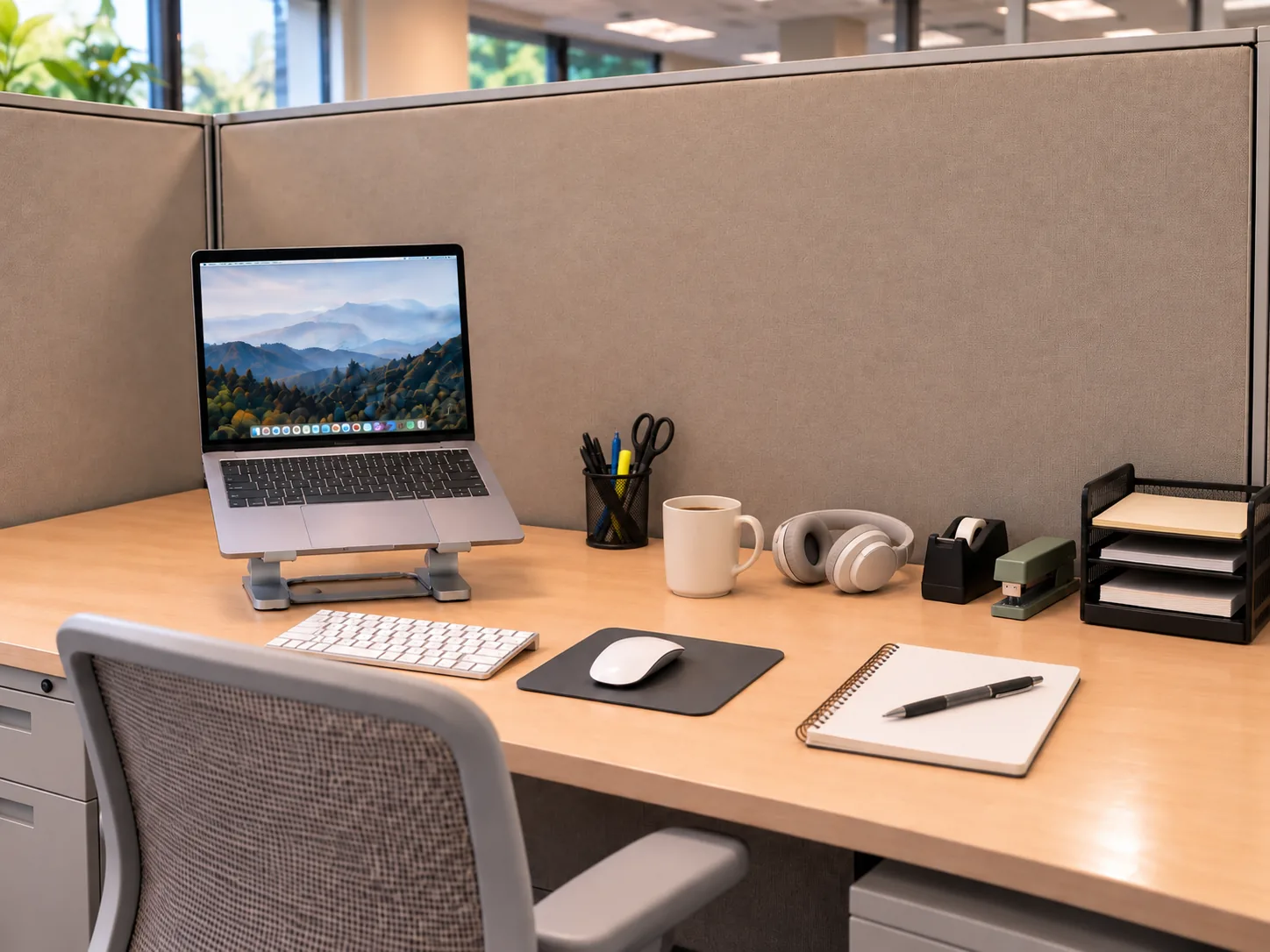
That became the basic idea behind the makeover: instead of adding more things, find better places for the things that were already there.
Put the Empty Wall to Work
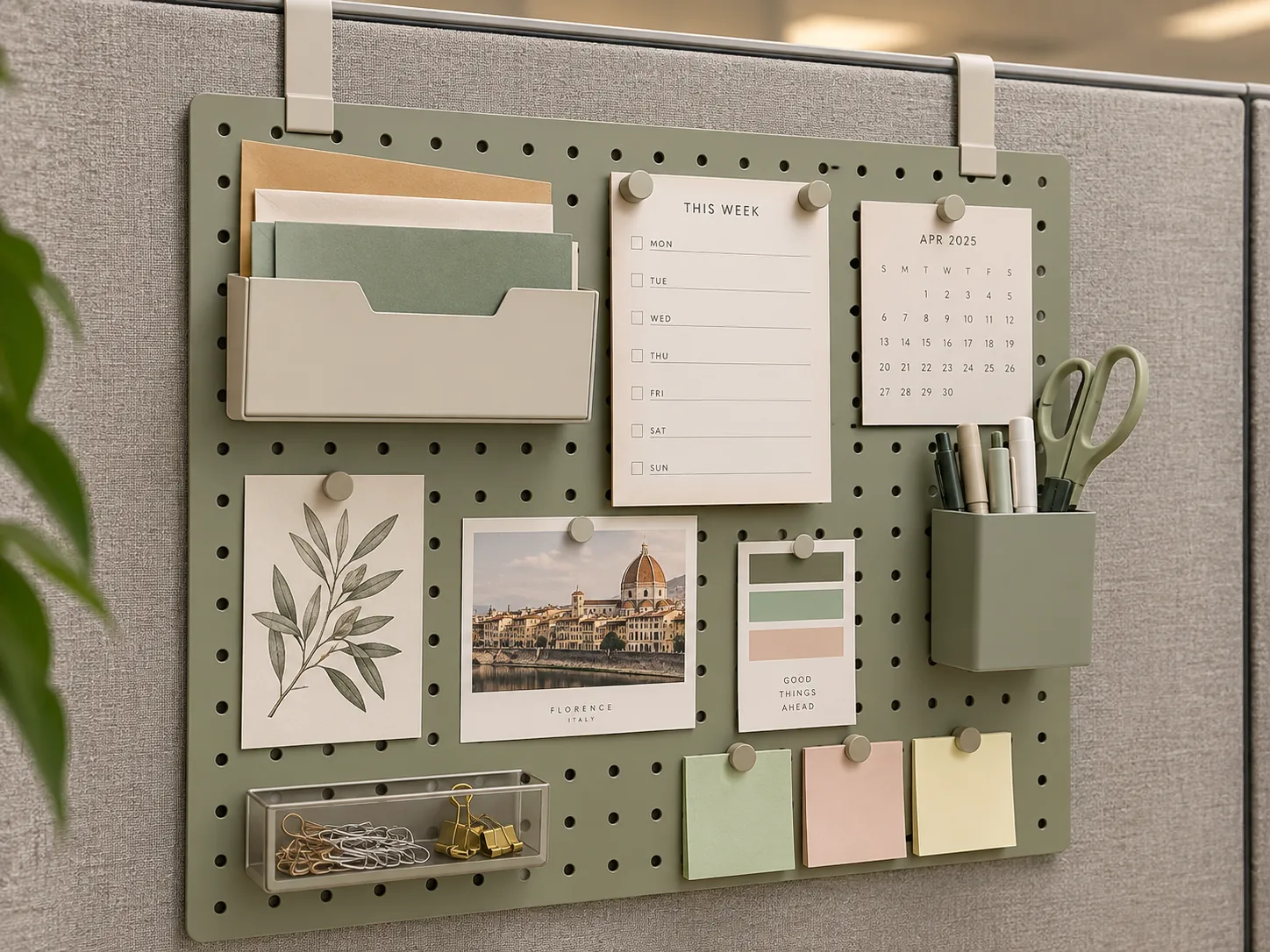
A cubicle wall is valuable space, especially when the desktop itself is limited. A pegboard creates room for everyday items without crowding the work surface.
For a cubicle, the mounting method matters. Most fabric-covered panels aren’t meant for drilling, so a lightweight pegboard can be hung using brackets that hook over the top of the partition.
That keeps the setup practical and removable.
The pegboard can hold lightweight items such as headphones, pens, sticky notes, small photos, and a shallow shelf.
I would avoid loading it with heavy objects or large planters.
Move Everyday Items Off the Desk
One of the easiest ways to make a small workspace feel calmer is simply to get a few things off the desktop.
The headphones move onto a hook. Pens go into a holder. Sticky notes move onto the pegboard. The clock gets its own small shelf.
None of these changes are dramatic by themselves, but together they free up quite a bit of visual space.
And the desk still has everything needed for an ordinary workday.
Make the Useful Things Look a Little Better
Not every improvement has to be purely decorative.
A coffee mug is still useful, but a patterned mug adds a little color. A notebook is still something you need for work, but a botanical cover makes the desk feel more finished.
The same idea works with smaller office tools too. Instead of replacing everything, choose versions of everyday items that work well together.
That way the desk feels styled without looking like it was decorated just for a photograph.
Add a Few Things That You Like
Once the practical items were organized, adding a few decorative touches that can make you smile.
The cat photo and photo of friends make the pegboard feel less like office storage and more like an actual workspace someone uses every day.
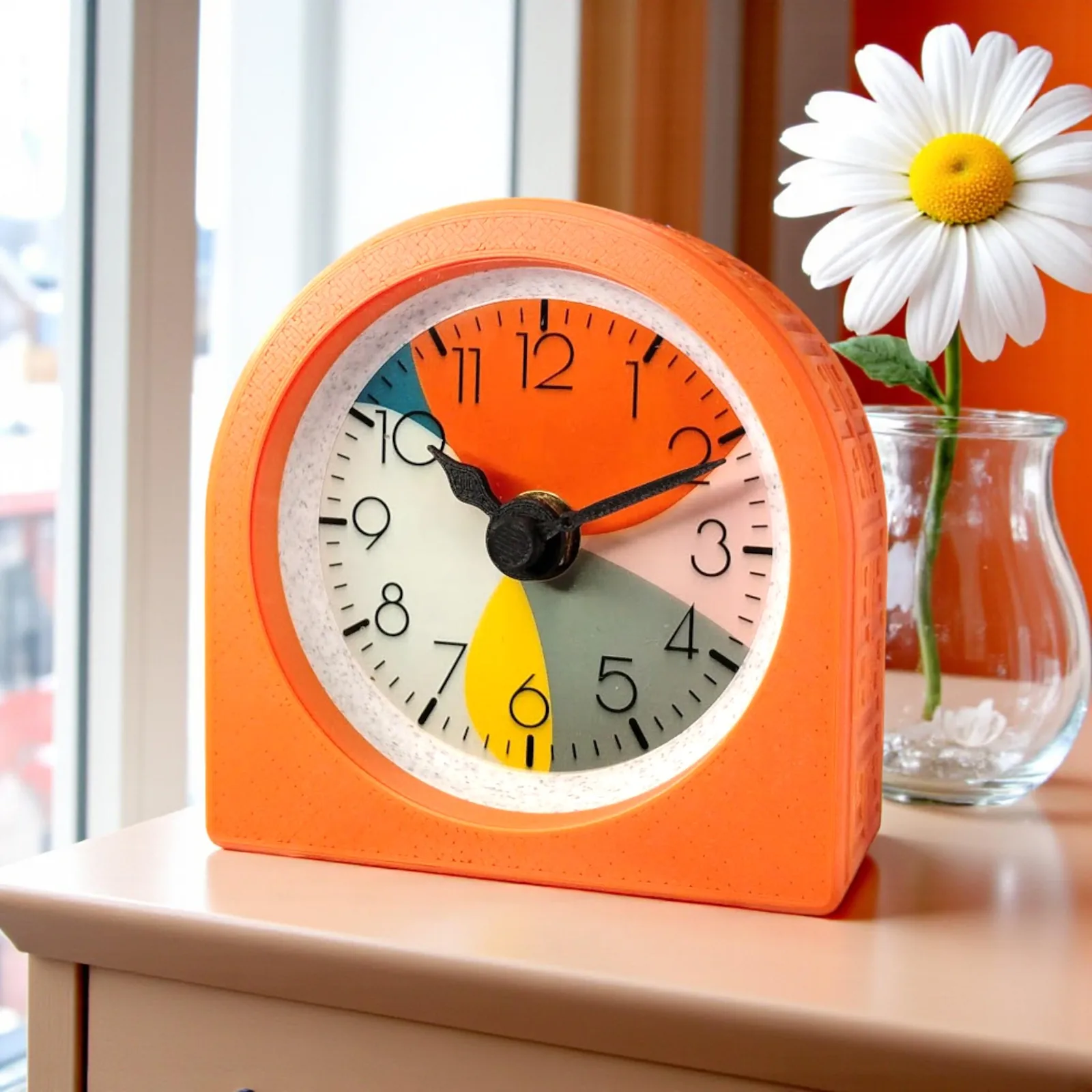
The orange clock adds the strongest pop of color. Because it sits on the pegboard shelf instead of directly on the desk, it adds visual interest without taking up much working space.
And one plant is enough to soften all the beige and gray around the cubicle.
The After: Same Desk, Better
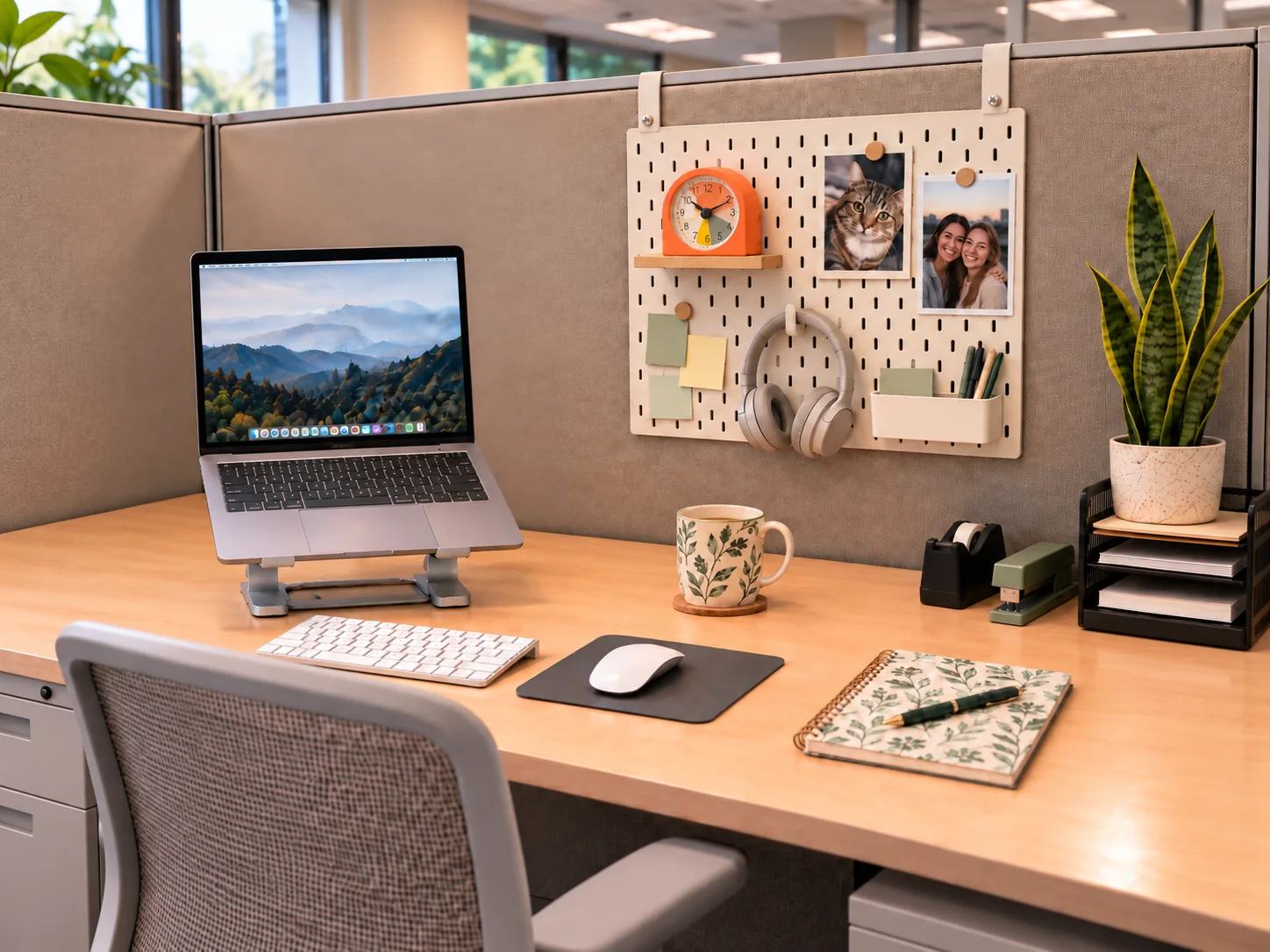
The finished cubicle still has the same basic work essentials.
There is still a laptop, keyboard, mouse, notebook, headphones, mug, pens, tape, stapler, and paper storage.
The difference is that the desk feels less crowded and the empty wall is now doing some of the work.
The pegboard adds organization, the upgraded everyday pieces bring in color and texture, and a few decorative items keep the space from feeling completely generic.
The makeover didn’t require changing the furniture or buying a completely new desk setup.
It was mostly about using the space better and being more selective about what stayed on the desktop, so it looks much more pulled together.